A Reassessment of U.S-Israeli Relations
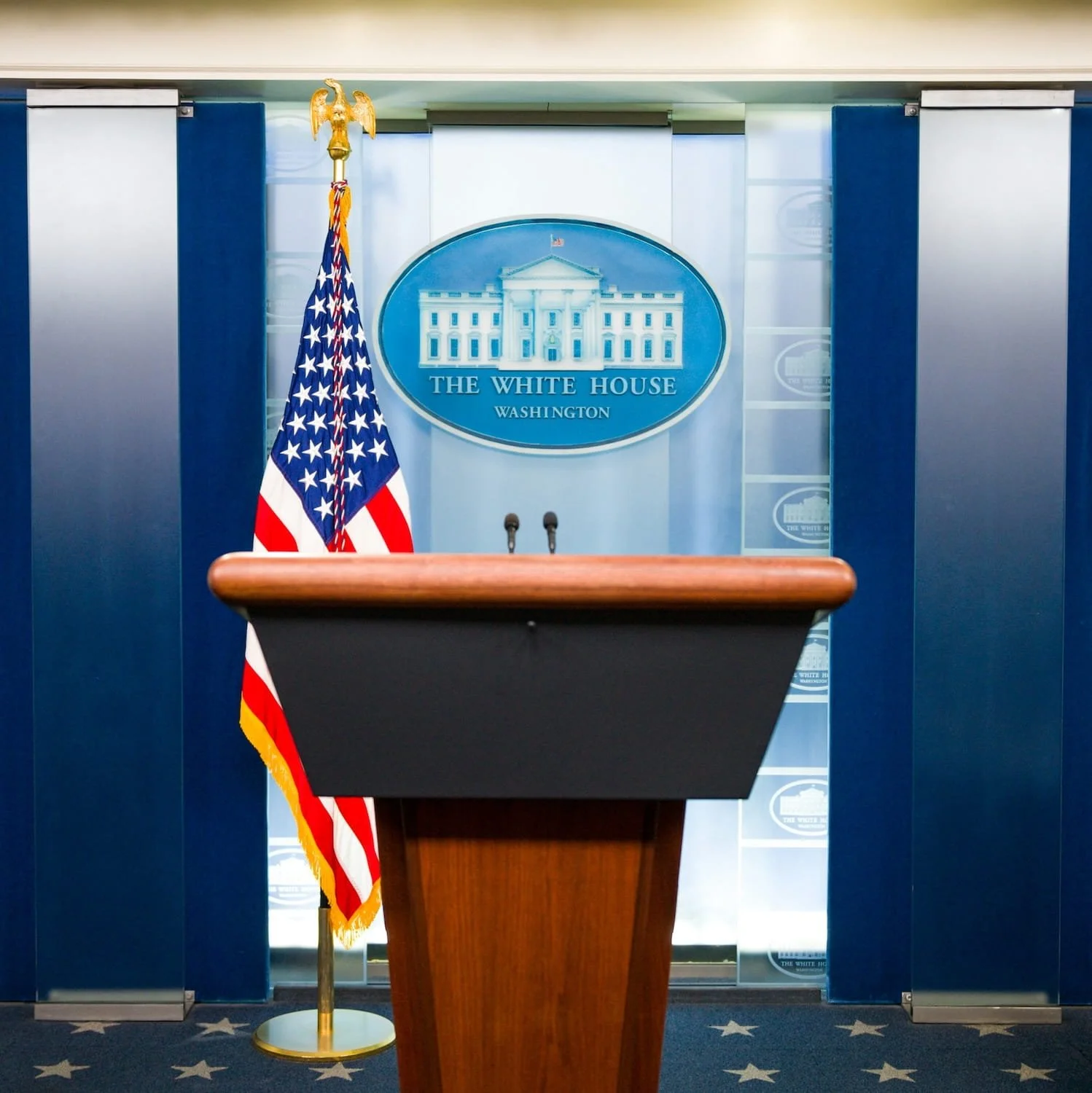
The White House briefing room, where US foreign policy decisions are communicated to the press and public.
When the State of Israel was first founded in 1948 as an explicitly Jewish state, its connection to the United States was minimal. The country had just emerged victorious amidst a bloody struggle against an Arab coalition and had its attention fixated on securing reparations from Germany in the form of Wiedergutmachung (compensation) and the emigration of Jews globally to the Jewish state. Although ties between both sides developed, American presidents from Truman to Kennedy had tried to balance relations with both the Arab states and Israel, with Kennedy infamously opposing the Israeli nuclear program and threatening Jerusalem with downgraded ties if Israel did not allow inspections of its Dimona reactor.
However, as Soviet support for the Arab states grew and culminated in the Six- Day War in 1967, American support for Israel exponentially increased and altered the region’s fundamental balance of power. American fears of Soviet expansionism were so rampant that Washington did not significantly react, even diplomatically, after Israel’s accidental attack on the USS Liberty that left 34 American sailors dead. The United States, motivated by desires to contain the spread of communism and Soviet influence combined with a powerful Jewish lobby, willingly turned a blind eye to much of Israel’s operations in the Middle East and beyond.
The tide, however, has begun to shift against Jerusalem. Although the country was able to garner much sympathy in the aftermath of the October 7 attacks, the American public is now unwilling to meaningfully support Israel in the realm of foreign aid. Even more important, the overwhelming majority of Generation Z now hold vastly unfavorable views of Israel, even sympathizing with Hamas. These changes have, and will undoubtedly continue to ripple across the American political landscape. Taking these unprecedented changes into account, it is prudent to assume that although continued amity between Washington and Jerusalem is likely, the probability of the former backing the Jewish state in any significant means, such as the American strikes on Iranian nuclear sites in June, will grow smaller in the future.
President Trump, meanwhile, has taken a radically different stance on the Jewish state than his first term. Shortly after eruptions of mutual missile strikes between Tehran and Jerusalem that threatened a precarious ceasefire deal in the Israel-Iran War, Trump snapped that the two countries “don’t know what the [expletive] they’re doing”.
This might have been meaningless if not for the Israeli strike on Qatar.
Following Israel’s unprecedented strike on Qatar on September 9 with the aim of retaliating against a shooting accused by Jerusalem to be perpetrated by Hamas, Israel received widespread condemnation globally. Perhaps what was surprising was the fury Prime Minister Netanyahu received from the White House behind closed doors. Netanyahu, it seemed, had underestimated both Trump’s personal ties to Qatar bonded by business and mutual courtship coupled with the eroded American strength in the Middle East. The United States, as Gulf states saw it, was no longer a reliable partner for security. According to outside observers, this consequently resulted in a formal defense pact between Pakistan and Saudi Arabia, with Islamabad essentially providing Riyadh a nuclear umbrella.
In recent days, it seems like Israel has turned into Washington’s protectorate. Trump declared that it is he who would decide “what is right” for the Jewish state. Vice President Vance and Secretary of State Rubio’s visits to Israel have been compared to “Bibi-sitting”, a humorous play on Netanyahu’s famous moniker. Although two U.S officials were ostensibly only there to ensure the smoothness and continuity of the Gaza ceasefire deal, the optics were clear—the United States was exerting pressure on Israel.
Following the Knesset’s vote to annex the West Bank, it received widespread rebuttal from American officials. Trump said plainly that it “won’t happen”, and Vance denounced it as a “stupid political stunt”. In response, Netanyahu declared that Israel is a sovereign state, and is capable of making its own decisions, demonstrating a deterioration in US-Israeli relations.