The Collision Course in Iran
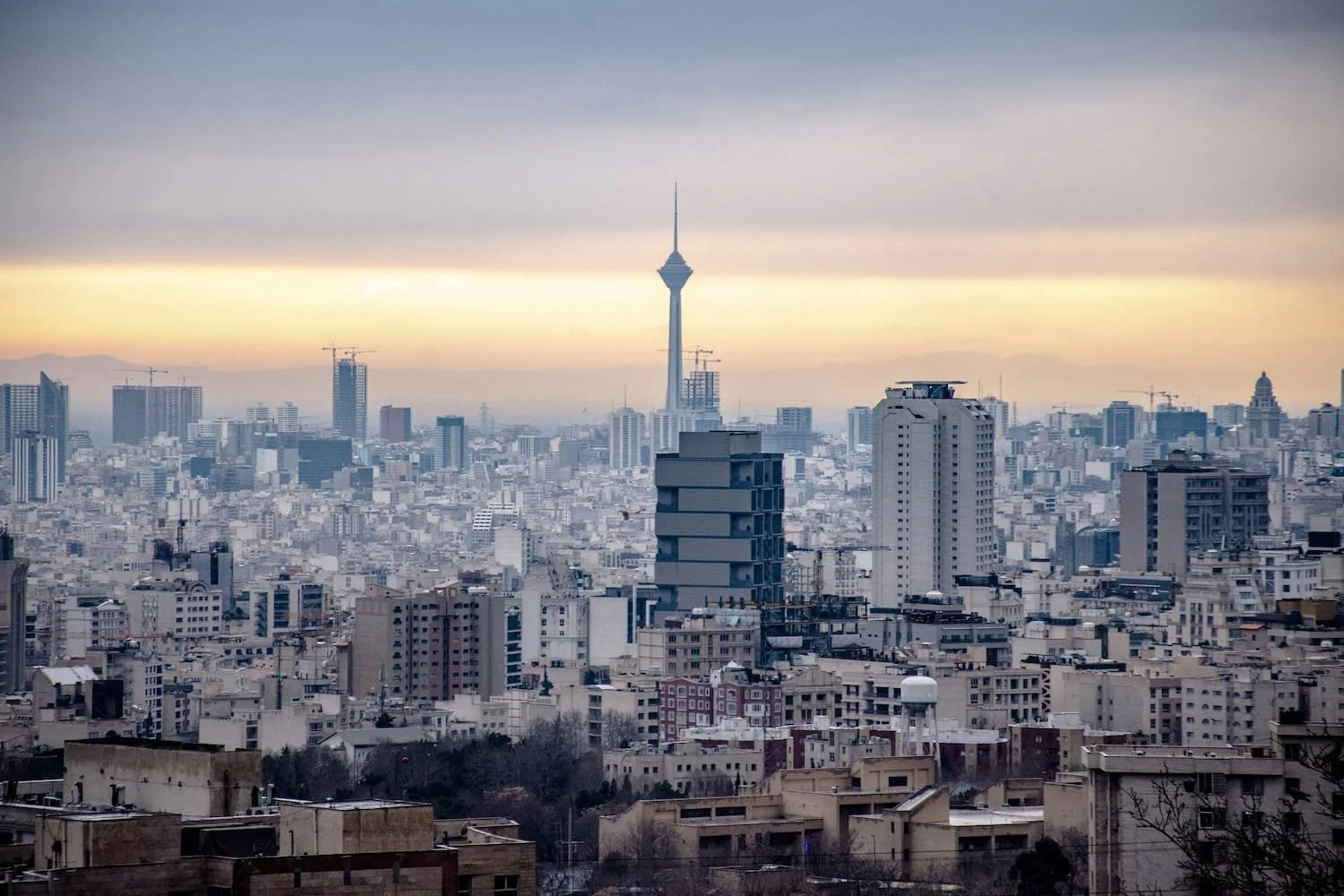
Tehran's skyline with the iconic Milad Tower—a city facing economic crisis and mounting international pressure.
Ever since its inception in 1979, the Islamic Republic of Iran has oscillated between nihilistic pessimism and careful optimism. The Iran-Iraq War from 1980 to 1988 claimed over 450,000 lives by conservative estimates. However, the Islamic Republic and the region largely emerged from the war unscathed with the balance of power in the region mostly maintained. When President Akbar Hashemi Rafsanjani was inaugurated in 1989, he spearheaded limited privatization of the economy that enabled the country’s recovery from the war. President Mohammad Khatami continued these reforms while improving bilateral relationships with the West, meeting the respective heads of state and government of both France and Germany. However, his successor, Mahmoud Ahmadinejad, reversed this progress by both tightening up the state’s grip on the economy and increasing tensions with the Western world. This culminated in the 2009 Iranian presidential protests after an election most independent observers said were marked by irregularities.
Since then, Tehran was able to increase its regional and global influence by building its network termed the Axis of Resistance and strengthening cooperation with states such as Russia and China. It is nonetheless mired periodically in waves of protests and massive social unrest, most notably in 2019, 2022, and 2026, and Tehran’s influence in the Middle East peaked shortly in the aftermath of the October 7 Hamas attacks against Israel, when Jerusalem responded by systemically destroying Iran’s proxies. The results for Israel are notable: Hamas is mostly decimated, Hezbollah is being disarmed by Lebanon, and Assad’s regime in Syria collapsed. After Israel felt secure that it was no longer boxed in by the Axis of Resistance, it attacked Iran directly in the 12-day Iran-Israel War in the summer of 2025 with the later involvement of the United States that struck Iranian nuclear facilities in Fordow, Natanz, and Isfahan. Iran’s disastrous performance in the war, most notably shown in its failure to prevent targeted Israeli assassinations against its military leaders and nuclear scientists as well as Israeli sabotage against Iranian infrastructure, has humiliated the Islamic Republic on the global stage.
The crisis Iran finds itself in today is structural. The regime is not able to alleviate the economy under the current hostilities it shares with the Western bloc, which is crucial for investments in the Iranian economy. The West, it seems, is also not willing to negotiate with Iran as it does not need Tehran. Despite the country selling more oil, mainly to China, it is bringing in less money. There is also little room for diversification away from Beijing, as other nations are reluctant to conduct business with Iran due to the instability of the country and tariff threats from the United States. Washington also seems to be on the verge of further military action against Iran. The Western countries are not willing to accept an Iran headed by the Islamic Republic, nor are Iranian elites willing to accept regime change. It is time for the two winds to collide.
Neither side is willing to bulge. The United States and Israel are not willing to accept an Iran with its proxies and regional firepower intact, much less an Iran with the possession of nuclear centrifuges. Iran, on the other hand, is not willing to negotiate away its sovereignty and risk impairing the regime’s image of strength. Both Washington and Tehran, it seems, are engaged in “salami-slicing” tactics, daring the other to make the first move. The United States has downed two Iranian drones over the Strait of Hormuz while Iran has attempted to intercept a U.S vessel in a failure. How the two states proceed from here remains to be seen.